SCIENTIFIC ATICLE
A plant-like battery: a biodegradable power source eco-designed for precision agriculture
M. Navarro-Segarra, C. Tortorsa, C. Ruiz-Díez, D. Desmaële, T. Gea, R. Barrena, N. Sabaté & J.P. Esquivel
Energy & Environmental Science
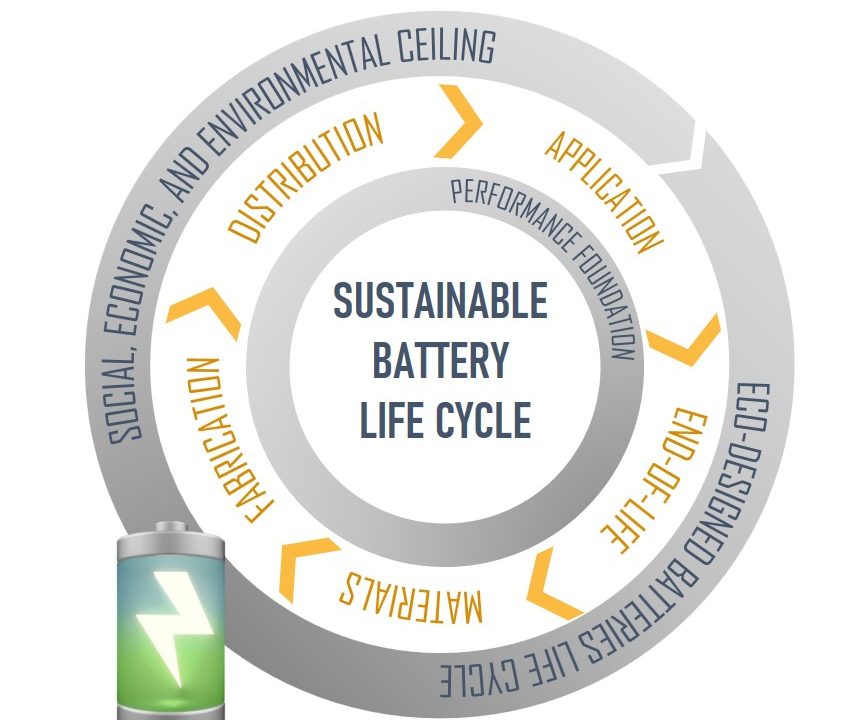
The FlowER battery: an Evaporation Flow Redox battery intended to bring alternative solutions to the requirements of precision agriculture applications. Its conception and development approach pursues a new portable battery paradigm, in which power sources are designed to be paired with the life cycle of the intended application. Environmental sustainability has been placed as the core priority, to create a new technology that can develop within the environmental boundaries of the planet. In this process, eco-design was used as a fundamental tool, from raw materials’ selection to disposability considerations, to create a prototype that meets PA-lifecycle requirements. Some of them are affordability, extended operational lifespan, and biodegradability.
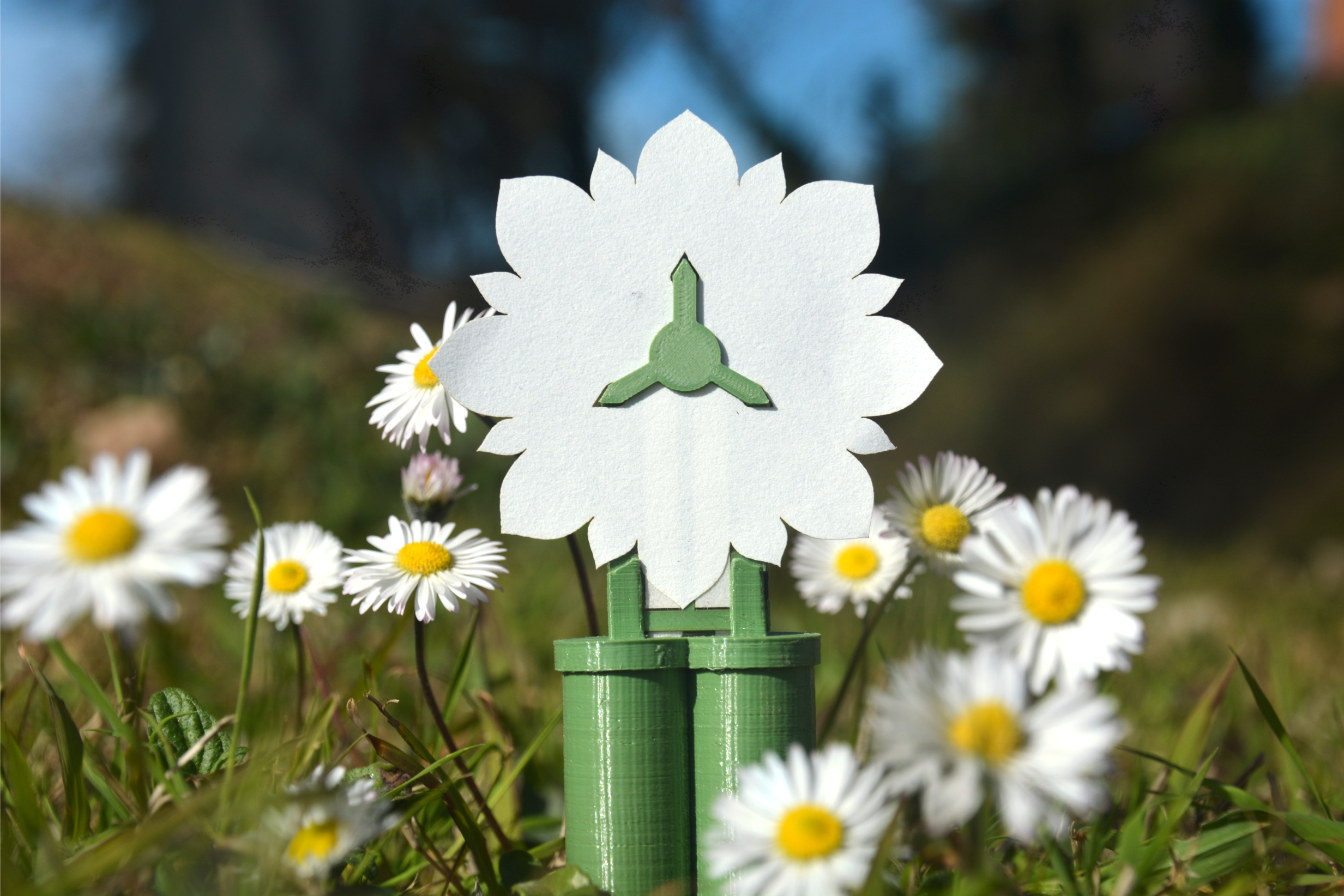
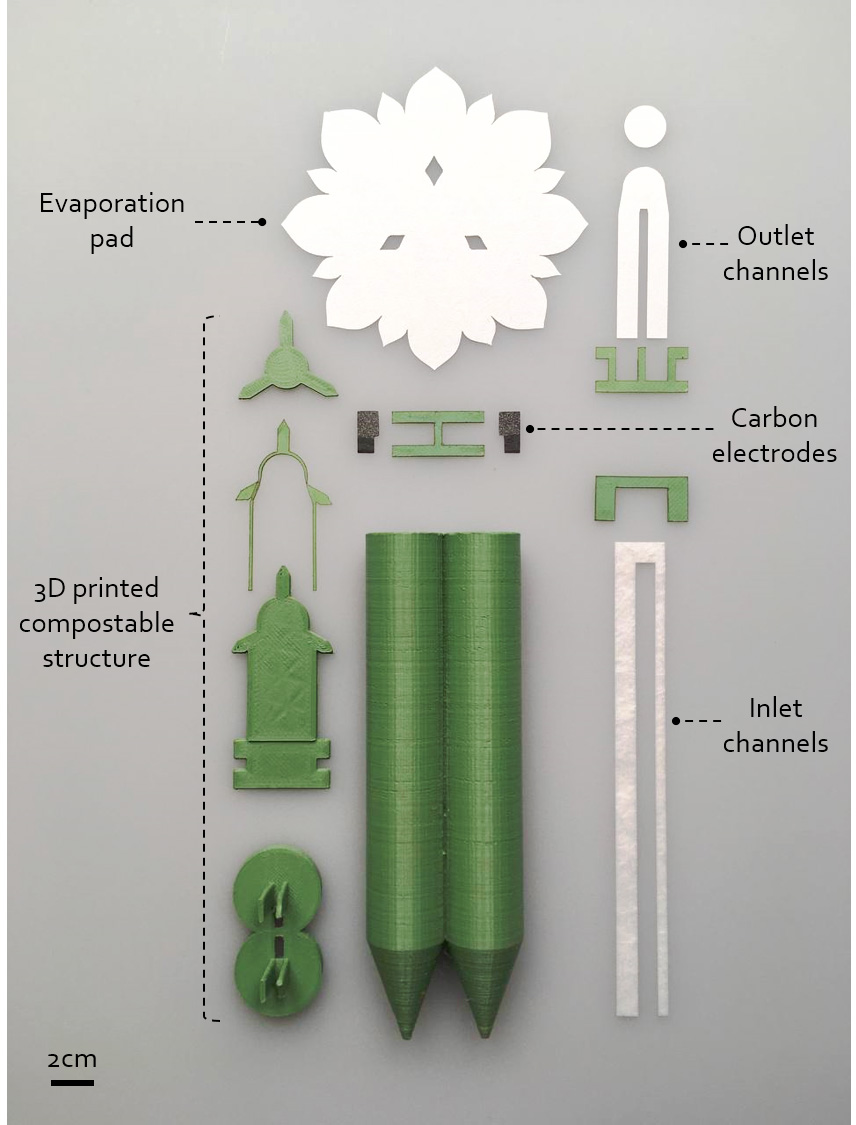
The overall architecture of this new battery is based in nature’s engineering, from the appearance to the working principle and end of life. The “roots, stem and leaves” are all made of low-cost paper-based materials. An absorbent pad, placed on the top of the FlowER, combines evaporation with capillary forces analogous to how transpiration pull works in plants, taking up water and nutrients from the soil and pulling them towards the leaves. This way, liquid reactants contained in reservoirs can flow continuously: when doing it through porous carbon electrodes, electrochemical reactions take place and electricity is extracted. Notably, the operation time, which usually ranges up to tens of minutes in conventional paper-based fuel cells, has been significantly extended up to 4 days. Finally, the harmless green reactants selected demonstrate to be powerful enough for real-world applications: we have proven that the FlowER battery can power a commercial wireless monitoring unit, dedicated to precision horticulture. After achieving its life-purpose, the new plant-inspired battery ends up its life cycle by returning to nature through biodegradation, proven by standardized ecotoxicity and compostability tests.